Why Your Bus Ticket Behaves Like a Straight Line (and How to Use That)
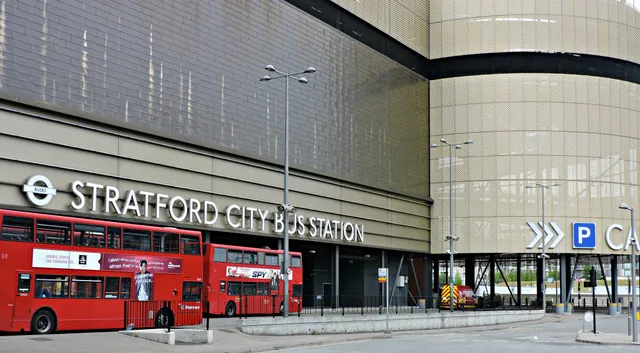
Photo: Thomas Nugent , CC BY-SA 2.0, via Wikimedia Commons
Let’s start with a confession: a bus fare is rarely a pure straight line. Operators use flat fares, zonal bands, caps and passes. But most of those rules are made of linear pieces, and once you draw them, the maths stops being abstract. It becomes a way to answer a very practical question: which ticket should you actually buy?
The straight-line bit: fare as a function of distance
Imagine an operator with a simple distance tariff: £1.60 to board, then 35p per mile. The cost is C(d) = 1.60 + 0.35d. That is a linear function: a fixed intercept plus a constant gradient. If your trip is 3 miles, C = 1.60 + 1.05 = £2.65. If it is 7 miles, C = 1.60 + 2.45 = £4.05. Double the distance and you do not double the fare, because the £1.60 boarding charge is doing some of the work.
Real operators rarely use one clean line. Birmingham’s network has flat-fare and zonal products; Manchester’s 192 route from Stockport into Piccadilly crosses fare stages; London’s buses are famously flat-fare, with a Hopper-style rule that lets you change buses within an hour for one fare. Each of those is still a linear or piecewise-linear model. A flat fare is just C = 2.00, a horizontal line. A zonal fare is a step function: the same price for every distance inside a band, then a jump.
Caps turn the line into a ceiling
A daily cap is where algebra becomes genuinely useful. Let s be the single fare and D the daily cap. If you make n single trips in a day, you pay:
C_day = min(n × s, D)
The cap wins when n × s > D. Rearrange and you get n > D ÷ s. With an illustrative single fare of £2.60 and a day cap of £5.00, n > 1.92, so the third single trip is where the cap starts to help. A return journey is only two singles, so the day ticket is not automatically worth it. That is the first trap: people buy a day ticket for a simple there-and-back trip and lose money.
A weekly pass works the same way. Let W be the weekly price and suppose you would otherwise buy a day ticket each travelling day. The pass is worth it when m × D > W, where m is the number of days you actually travel. Rearranged: m > W ÷ D. If the weekly pass is £18 and the day cap is £5, you need more than 3.6 travelling days. Four days is the break-even; five days is a clear win. If you work from home twice a week, the maths changes fast.
Three routes, one worksheet
Here is a toy tariff based on typical UK patterns, not a live price list. Use it to see the method, then swap in your own fares.
| Route example | Single s | Day cap D | Week W | Day ticket break-even | Weekly break-even days |
|---|---|---|---|---|---|
| Birmingham 50, Moseley to city centre | £2.60 | £5.00 | £18.00 | 2 singles (since 2 × 2.60 = £5.20) | 4 days (18 ÷ 5 = 3.6) |
| Manchester 192, Stockport to Piccadilly | £3.20 | £5.80 | £21.00 | 2 singles (2 × 3.20 = £6.40) | 4 days (21 ÷ 5.8 = 3.62) |
| London 18, Euston to Baker Street, flat fare plus Hopper | £2.00 | £5.25 | £24.70 | 3 singles (3 × 2.00 = £6.00) | 5 days (24.7 ÷ 5.25 = 4.7) |
Read the table like a consumer, not a mathematician. On the Birmingham example, a day ticket beats two singles by 20p, but only just. On the Manchester example, the day ticket is clearly cheaper than a return at single fares. In London, the Hopper rule means your first bus fare can cover a change within the hour, so the real comparison is not simply single versus day cap; it is single-plus-change versus cap. That is a piecewise model: if total journey time t is 60 minutes or less, you pay one fare; if t is greater, you pay again.
The inequality that decides your ticket
The core consumer inequality is simple:
Buy the day ticket only if n × s > D
Buy the weekly pass only if m × D > W, or if m × s > W when you would otherwise buy singles
The second version matters. Do not compare a weekly pass with a day ticket you would never have bought. Compare it with the cheapest thing you would actually do. If you make one return trip a week, a weekly pass is almost certainly a donation to the operator.
There is also a time cost. A cap is a ceiling on money, not on hassle. If the day ticket forces you to tap in and out differently, or if your route is not covered, the cheaper ticket may be the more expensive choice in practice. Algebra gives you the break-even point; it does not give you the reliability statistics.
Where the model breaks
Buses are not algebra worksheets. Delays, strikes, remote work, off-peak rules, group tickets and contactless caps all bend the clean lines. In 2026, many contactless systems apply the min() for you at the end of the day, which is excellent. But the operator still decides the cap, the bands and the exceptions. Your job is to check the break-even, not to trust the marketing.
So next time you are standing at a bus stop in Birmingham, Manchester or London, do a quick mental sketch. What is your single fare? What is the cap? How many trips will you really make? If the answer is two, the day ticket probably is not your friend. If it is five, the weekly pass probably is. That is not textbook algebra. It is just the maths of not getting ripped off.