The Quota on the Hoarding: Auditing an Affordable Housing Promise

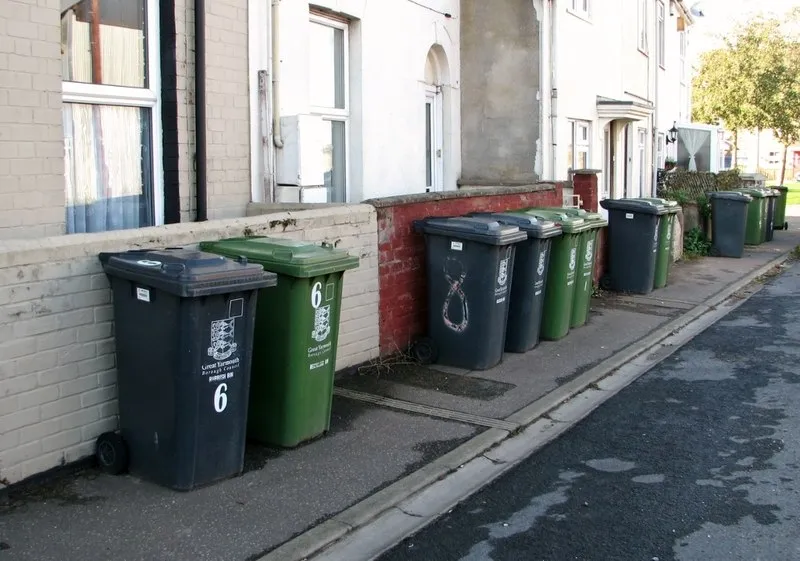
Photo: Martin Addison, CC BY-SA 2.0, via Wikimedia Commons
Walking past a development site, the hoarding often carries a reassuring line: 20% affordable homes. It sounds settled. It is not. A percentage is only as honest as the number underneath it, and in planning applications that number can be units, bedrooms, habitable rooms or a pile of cash. The algebra is not complicated, but it is easy to hide in the appendix.
First, find the denominator
Let N be the total number of homes in the scheme and A be the number of affordable homes. A promise of at least 20% is the inequality A ≥ 0.2N. If the application is for 48 homes, then 0.2 × 48 = 9.6. Because homes are whole things, a promise of no less than 20% means A ≥ 10 unless the local policy has a different rounding rule. If the application says 9 affordable homes, the actual share is 9 ÷ 48 = 0.1875, or 18.75%. That is not a rounding quibble; it is a different promise.
Rounding rules matter. Some councils round to the nearest whole unit. Some round up. Some apply a threshold before any affordable housing is required. The glossy brochure will not tell you which rule applies. The local plan and the Section 106 agreement will. Always check the denominator before you trust the percentage.
The unit mix is a second equation
Suppose a scheme has 60 homes, so 20% is 12 affordable homes. That is the headline. But affordable housing usually comes with a tenure split. If policy asks for 70% social rent and 30% shared ownership, then R + S = 12, with R ≥ 0.7 × 12 = 8.4. Since you cannot hand over four-tenths of a home, R ≥ 9 and S ≤ 3. An application showing 8 social rent and 4 shared ownership meets the total but fails the tenure inequality.
Bedroom mix can bite too. If policy requires 30% of affordable homes to be three-bedroom, then T ≥ 0.3 × 12 = 3.6, so T ≥ 4. A scheme can hit its 12-unit quota and still be short of family homes. The algebra forces you to check the composition, not just the total.
Habitable rooms: the quieter denominator
Some promises are written as 20% of habitable rooms rather than 20% of homes. Let H be the total number of habitable rooms and A_H be the affordable habitable rooms. The promise becomes A_H ≥ 0.2H. Take a 48-home scheme with 16 one-bedroom homes at 2 habitable rooms each, 24 two-bedroom homes at 3 rooms each, and 8 three-bedroom homes at 4 rooms each. Then H = 16×2 + 24×3 + 8×4 = 136. Twenty percent is 27.2, so at least 28 affordable habitable rooms are needed if the policy rounds up.
Now suppose the 10 affordable homes are all one-bedroom flats. They provide 10 × 2 = 20 affordable habitable rooms. The unit quota is met, but the room quota is missed by 8 rooms. That is the difference between 20% of homes and 20% of habitable rooms. Both can be legitimate promises, but they are not interchangeable. Check which one appears in the agreement.
Commuted sums: when the promise becomes money
Sometimes affordable housing is delivered off-site, or the developer pays a commuted sum instead. Let S be the commuted sum per missing affordable home. The cash required is C ≥ (A_req − A_prov) × S. If 12 affordable homes are required, 10 are provided and the sum is £95,000 per unit, then C ≥ 2 × 95,000 = £190,000. If the formula is per bedroom, swap units for bedrooms. If payment is delayed, discount it: £190,000 in three years is not £190,000 today. Check indexation too, because many agreements link the sum to build costs.
There is also a policy question. Some councils allow cash in lieu only after on-site provision has been maximised. A cash figure can look generous while quietly replacing homes that should have been built. The inequality tells you the amount; the policy tells you whether the amount is allowed at all.
A five-minute audit
- Find total homes N and affordable homes A. Compute
A ÷ N. - Find the rounding rule in the local plan.
- Check tenure:
R + S = A, then test the tenure percentages. - Check bedroom mix against the policy requirement.
- Find H and compute
A_H ÷ Hif the promise is room-based. - Find the commuted sum formula and test
C ≥ shortfall × S.
A simple table helps: promise, number, equation, result. If any inequality fails, ask for the planning officer's report. These are public documents, and they often explain which denominator was used.
The hoarding is marketing. The Section 106 agreement is the contract. The algebra gives you a way to read it without a law degree. You are not proving fraud; you are checking arithmetic. If the numbers add up, good. If they do not, you have a precise question for the council: which denominator did you use, and why?