Due Is Not a Time: The Inequality Hiding on Your Bus Shelter Display
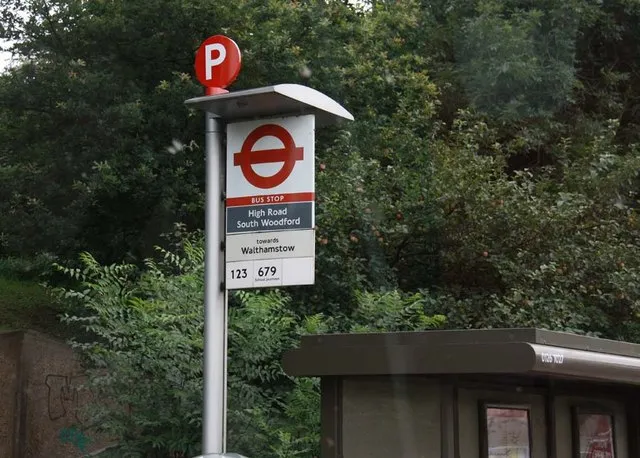
Photo: John Salmon , CC BY-SA 2.0, via Wikimedia Commons
At 08:14 on a grey high-street morning, the shelter display says 'Due'. You look up the road. Nothing. Then a bus appears from behind a delivery van, indicators ticking, and you realise the display was not wrong so much as early. The word 'Due' is not a time. It is a bucket.
That distinction matters because a bus countdown is doing two jobs at once. It is repeating a timetable, and it is guessing at traffic. The timetable part is modular arithmetic. The guessing part is an inequality. Put them together and you get a surprisingly useful rule for the kerb.
The timetable is a clock with a reset
Take a route that runs every 12 minutes from 07:00. Let t be the minutes after 07:00. The next scheduled bus leaves the terminus at 12 × ceil(t/12), assuming the first is at 07:00. If you arrive at 08:14, that is t = 74. The next scheduled departure is 12 × ceil(74/12) = 12 × 7 = 84, or 08:24. Your scheduled wait is 10 minutes.
A neater way to write it is modular. The headway is H = 12. Your position in the cycle is r = t mod H. The wait to the next scheduled bus is (H − r) mod H, with the convention that a remainder of zero means zero wait. At t = 74, r = 2, so the wait is 10 minutes. At t = 83, r = 11, so the wait is 1 minute. This is the honest arithmetic of a timetable: regular, predictable, and completely blind to the fact that a bus is stuck behind a refuse lorry.
'Due' is a threshold, not a timestamp
Live data changes the question. The display does not show the scheduled wait. It shows a prediction, p, in whole minutes. The software has buckets. A bus might show 'Due' when p is under about 1.5 minutes; '2 min' when p is between roughly 1.5 and 2.5; and so on. The word 'Due' therefore means 'inside the next small interval', not 'at your feet'.
The real arrival time A is the prediction plus error: A = p + e. The error e can be positive if the bus is not yet through the lights, or negative if the driver is quicker than the model expects. A display showing 'Due' with p = 0.8 could mean the bus is 20 seconds away, or it could mean the bus is two minutes away and the prediction is stale. The display is not lying. It is rounding.
The inequality for deciding to walk
Now suppose you can walk to your destination in W minutes. You are at the stop, the display says p, and you want a rule that is better than hope. Add a traffic allowance u: two minutes for a quiet morning, three or four when the school run is on. Keep waiting if
p + u < W
and start walking if
p + u > W.
If the two sides are equal, it is a coin toss; pick the option that keeps you drier.
Example: W = 14 minutes, u = 3. If the display says 2, then 2 + 3 = 5 < 14, so wait. If it says 9, then 9 + 3 = 12 < 14, so still wait, but with less confidence. If it says 11, then 11 + 3 = 14, so it is a tie. If it says 12, then 12 + 3 = 15 > 14, so walk. The rule is crude, but it is honest about the uncertainty. It also stops you from treating 'Due' as a guarantee.
Scheduled versus live: a worked comparison
At 08:14, the timetable says the next bus is at 08:24: ten minutes. The live display says 'Due': p is under 1.5. With u = 3, the expected arrival is inside about four and a half minutes. If your walk is 12 minutes, the inequality says wait. If the display jumps to 10 minutes, the same walk becomes 10 + 3 = 13 > 12, so the maths says start walking. The display has not changed the bus; it has changed your information.
There is a catch. Modular arithmetic assumes evenly spaced buses. Real routes bunch. Two buses arrive together, then nothing for 20 minutes. The display usually shows the first bus, which may be full, while the second is a minute behind and empty. In that case the average wait for a random arrival is not simply H/2. Bunching raises the average and makes the countdown less reliable, especially in the last few minutes.
The kerb-side rule
So here is the pocket version. Work out your walking time W. Pick a traffic allowance u. Read p from the display. If p + u is comfortably less than W, stay put. If it is greater, walk. If the display says 'Due', treat p as about 0.5 to 1.5, not zero, and remember that the bus still has to get through the lights.
The countdown is a useful instrument, but it is not a promise. It is a timetable wearing a live-data coat. The algebra underneath is just a modular clock and a small inequality — which is exactly the sort of maths that lives on your street.